ServicesWhole-Home Filtration
Whole-Home Filtration for Bellaire Homes
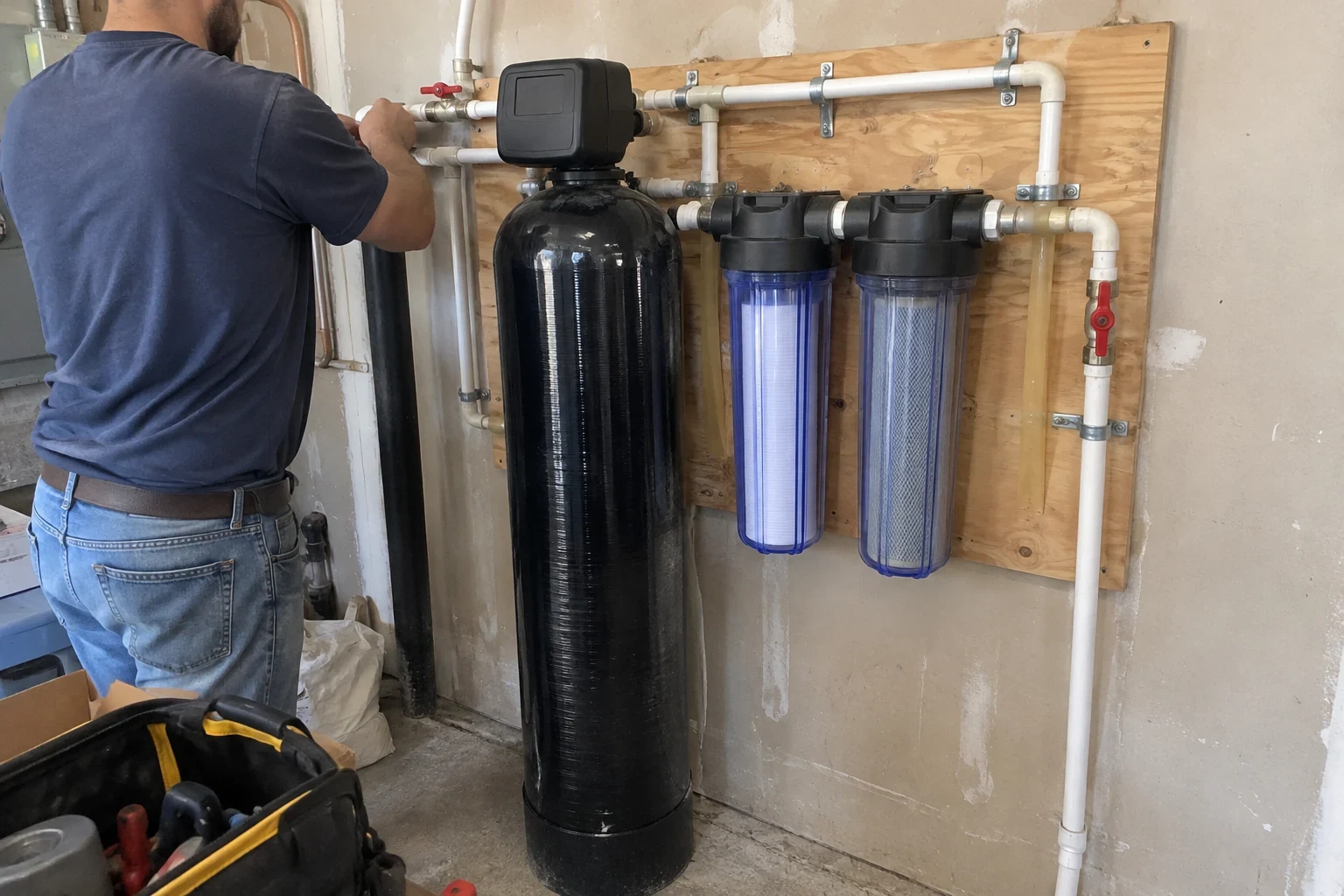
Our whole-home systems treat water at the main line, before it branches to your kitchen, bathrooms and laundry. Every tap and showerhead then runs without that pool-like smell or flat taste. We size each system to your plumbing, explain upkeep in advance and service it afterward.
Why treat the water at the main line
Public water suppliers add a disinfectant so the supply stays safe through miles of pipe. It does that job well, but it leaves a taste and odor behind. You can notice it in a glass of water, and even more in a steamy bathroom. A whole-home system runs all incoming water through carbon media where it enters the house, so the water is treated once, before it reaches any fixture.
Choose this system when the problem is the water throughout the house, such as shower odor, how your skin and hair feel after bathing, or ice that tastes off. If what you drink is the main concern, or you have a specific worry like lead from older pipes, reverse osmosis under the kitchen sink usually does more, and we will tell you that directly. If no one has checked your water yet, we often recommend starting with water testing.
What comes with your system
- Sized for real demand
- We count your bathrooms and fixtures and the people who live in your home, then pick a tank and control valve that hold pressure steady when the dishwasher runs during two showers. An undersized system is the regret we hear about most, so we size it carefully.
- The right carbon for your supply
- Standard carbon handles chlorine well. Chloramine needs catalytic carbon, which is built for that compound. We check which disinfectant your water carries before we order anything.
- Sediment protection upstream
- A compact cartridge sits ahead of the main tank and traps grit and flakes of rust. With that stopped early, the carbon lasts longer and keeps doing its job.
- Tidy, serviceable plumbing
- We connect to the main with a bypass valve, which lets the system be serviced while water keeps flowing to the rest of the house. Every joint is neat, labeled and easy to get to.
- Free installation
- Our labor to set up the system is part of the offer. The price we quote covers the equipment you are getting.
When whole-home filtration makes sense
The bathroom smells like a pool
Hot showers release disinfectant into the steam. If the room has a swimming-pool smell afterward, a carbon system at the main line takes care of that.
Skin feels tight after bathing
Many people notice dry skin or dull, brittle hair. Removing chlorine before it reaches the shower is a simple change that often helps.
Coffee and ice taste flat
A pitcher filter only treats the water you pour into it. When refrigerator ice and morning coffee still taste wrong, the fix belongs where the water enters the house.
A drawer full of replacement cartridges
Filtered showerheads, faucet attachments and pitchers each need their own replacements on their own schedules. A single system at the entry can take the place of most of them.
Grit in faucet screens
Specks collecting in aerators, or a faint tint after nearby line work, suggest your setup should include a sediment pre-filter.
What shapes the price
Because installation is free, most of what you pay goes toward the equipment itself. The size of the house, how many bathrooms it has and what your supply contains decide how much media and what kind of valve the job takes. Before anything is ordered, we walk you through each part of the price by phone.
Fixture count and daily use
A home with more bathrooms and more people living in it needs a bigger tank, so water stays in contact with the carbon long enough and pressure holds up.
Which carbon the water calls for
Catalytic carbon, used where the disinfectant is chloramine, is the pricier media. Choosing the cheaper standard carbon for that water saves a little at first and wears the system out sooner.
Extra treatment stages
Every system includes a sediment pre-filter. An additional stage only goes on the estimate when your water gives a reason for it.
Where the system goes
A main line that runs exposed through the garage keeps parts to a minimum. Rerouting pipe, or housing the tank outside behind a protective cover, adds materials.
From first call to finished install
- 1
We start by listening
Describe what bothers you about the water and tell us a bit about the house. We will let you know whether whole-home filtration addresses it, or whether something else, such as a water softener, would serve you better.
- 2
Locating the main
Next we find where the supply line enters your home. Houses around here mostly sit on slab foundations, so the line usually comes up in the garage or along an outside wall. We choose a spot that keeps the tank protected and easy to reach.
- 3
The install visit
The water is off only for a short stretch while we set the pre-filter and tank, plumb the bypass and pressure-check each connection. Most homes have running water again before we leave. We cover the floors where we work and clean up afterward.
- 4
Handover and ongoing care
Before we go, we show you how the bypass valve works, tell you when the pre-filter is due and explain what to expect for media changes. When service time comes, you reach us directly, not a manufacturer's hotline.
Common questions about whole-home systems
Will my shower pressure drop after installation?
With a properly sized system, you should not feel a difference. A drop in pressure usually means the tank is too small for the household. That is why we size every system by how many fixtures you have and how your family uses water.
Can a whole-home carbon system take out lead?
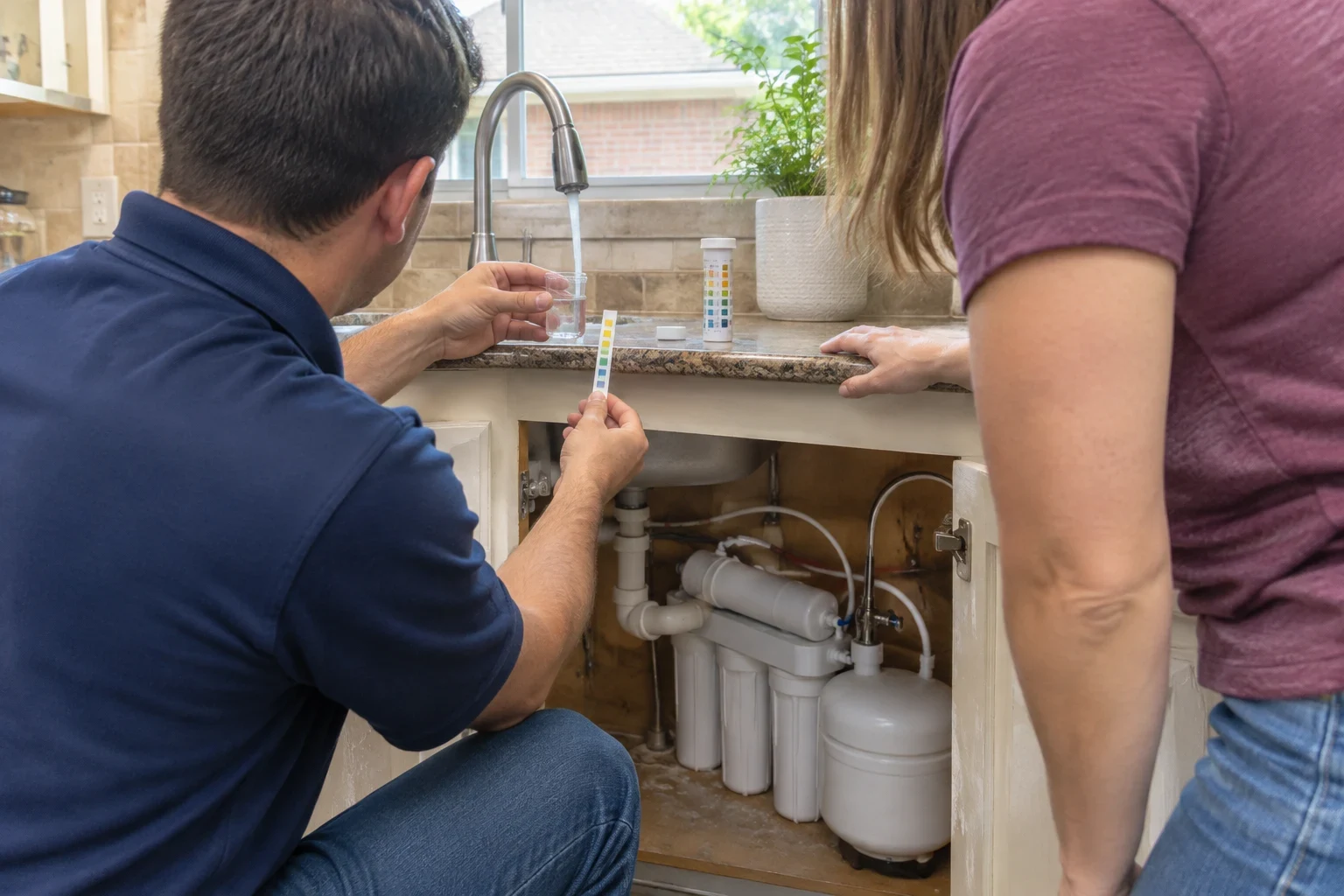
That is not its job. A whole-home carbon system is designed for disinfectant, taste and odor. When older plumbing raises a lead question, reverse osmosis at the kitchen sink is the right equipment, and water testing will show whether you need it at all.
How long does the filter media last?
That depends on the type of media, the incoming water and how much water your home goes through. The sediment cartridge needs changing more often than the carbon bed. At the walkthrough, we give you a schedule that matches your household.
Should I add a water softener at the same time?
Only if your water calls for one. A filter removes taste and odor, and a softener deals with hardness minerals. We only suggest a softener after a hardness test of your home's water shows it would help.
Who do I contact if the system needs service later?
You contact us. Full services after the sale are part of how we work, so media replacement, valve settings and any questions go to the same crew that put the system in.
Fresher water throughout your home
Let us know what you smell or taste at the tap and where your main line sits. We will describe the system that suits your home, and everything it involves, before any date goes on the calendar.