ServicesWater Softeners
Water Softeners in Bellaire
We install water softeners after we know what your water actually holds. A hardness reading sets the size, the salt setting and whether a softener is the right answer at all. Then we fit it neatly where your main line enters your home.
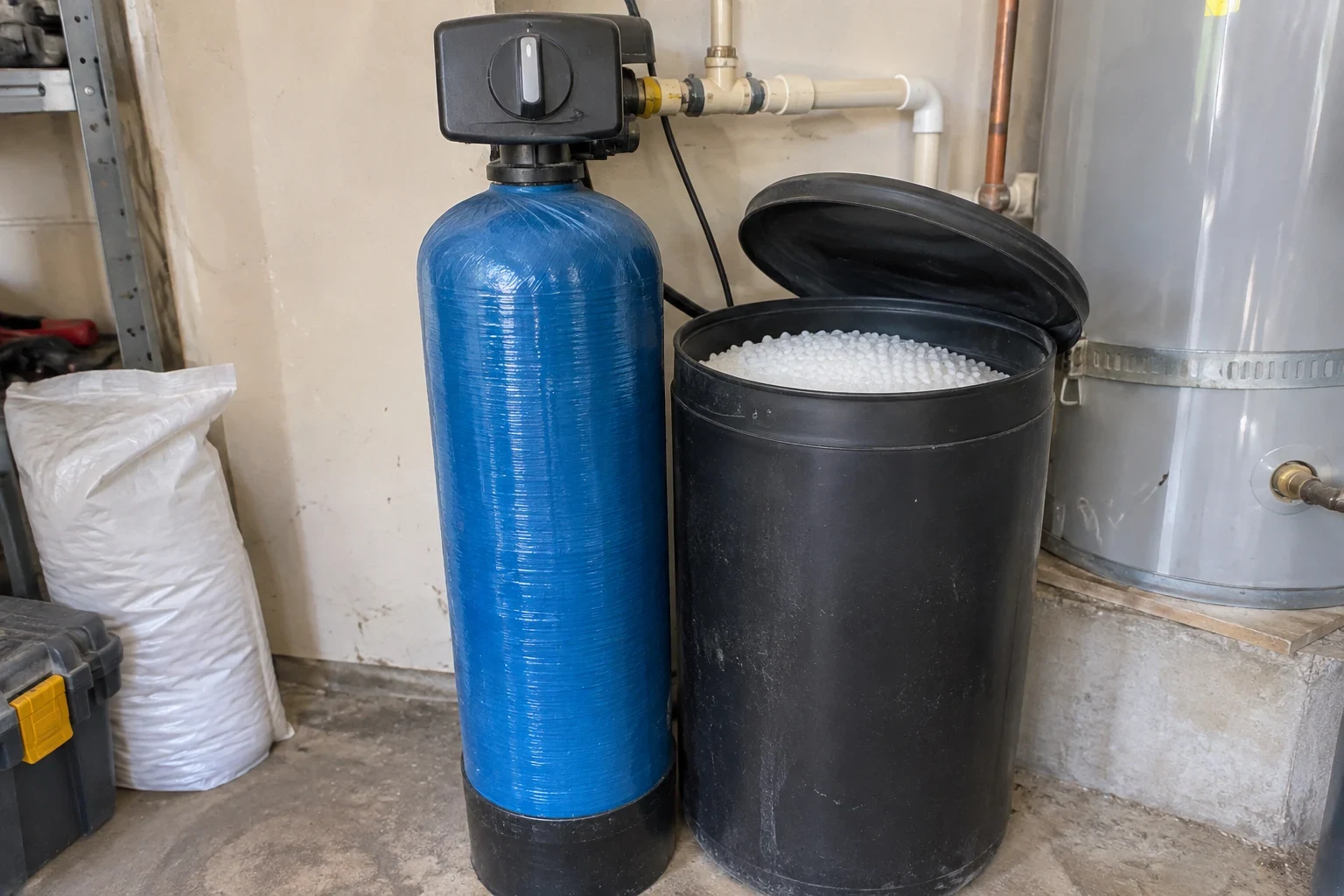
When a softener is the right call
Calcium and magnesium dissolve into water as it travels through rock. Heat pushes them back out, and they settle as a pale, hard crust in tank water heaters, on glass shower doors and in the small screens at the tips of your faucets. A softener exchanges those minerals for sodium or potassium as water passes through a tank of resin beads, so the crust stops forming.
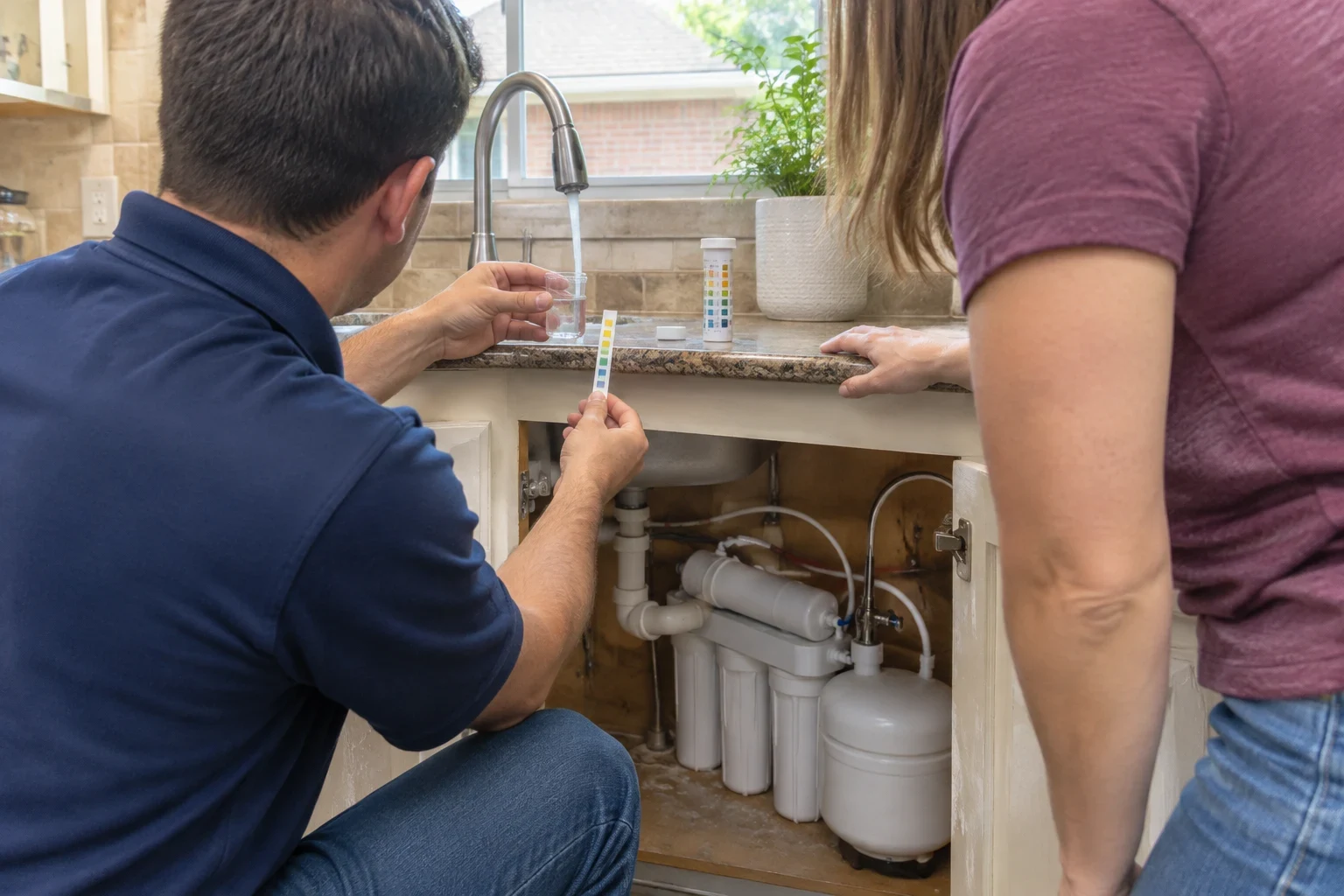
Some homes do not need one at all. Hardness differs from one supply to the next, so we take a reading before we recommend equipment. When the numbers come back low and what bothers you is the smell or taste of chlorine, whole-home filtration is usually the better spend, and we will tell you that plainly. For better drinking water at the kitchen sink, reverse osmosis often fits best, and it pairs well with a softened line.
What the work includes
- Testing before sizing
- We measure hardness in grains per gallon and look for iron as well, because iron affects how the resin and regeneration settings should be configured. The number of people in your home and your daily water use go into the sizing too.
- Capacity matched to use
- A tank that is too small regenerates over and over and burns through salt. One that is too large can leave resin sitting unused. We size from your reading and how your household actually uses water.
- Fitted at the main line
- The softener goes where your main line comes into the house, often in the garage near the water heater. We add a bypass valve so the unit can be isolated while every tap in the house still runs. The drain line is finished with a proper air gap.
- Free installation
- Installation is free with every system we sell, so what you pay goes toward the equipment you pick.
- Full services after the sale
- We stay with the system through full services after the sale: resin checks, valve adjustments and new salt settings if your household grows or shrinks. The people who installed it are the ones you call.
How hard water shows up in your home
Chalky buildup on fixtures
Pale rings around faucets, on showerheads and inside the kettle are mineral deposits. Vinegar clears them, and within weeks they are back.
Cloudy glasses and dishes
A dull haze on glassware fresh from the dishwasher usually means minerals are left behind as the water dries.
Soap that barely foams
Minerals react with soap, so shampoo and dish liquid struggle to lather and can leave a filmy feel on skin and hair.
A water heater that crackles
Mineral sediment gradually builds up across the bottom of a tank heater and traps small pockets of water underneath. The popping you hear is that water boiling through the layer, and the burner has to run longer to heat the tank.
Weak flow at certain taps
Aerators and showerheads that clog are often where mineral buildup first gets noticed.
What moves the cost
Two homes can need very different softeners, so we price from your reading rather than a catalog page. You hear the full cost before we start, and installation is free. These are the things that change the number.
Hardness and iron levels
Harder water and any iron present call for more resin capacity or a different media setup.
Household size and use
More people, more bathrooms and an irrigation tie-in all raise daily demand and push sizing up.
The valve and tank you choose
Metered valves that regenerate only when needed cost more upfront and use less salt over the years. Tank materials and finish vary too.
Where the main line runs
A garage location near the water heater is straightforward. Many homes here sit on slab foundations, so a main line in a tight closet or one that needs rerouting adds plumbing time.
How the day runs
- 1
A conversation by phone
You tell us what you are seeing and how many people live in your home. We set a visit and explain what we will check.
- 2
Testing and a straight answer
We read your hardness and iron levels on site and walk you through the numbers. If a softener does not make sense for your water, you hear that before anything else.
- 3
Careful installation
We shut off the main, cut in the bypass and fittings, and run the drain line. Floors and garage surfaces get covered where we work, and water is usually off for a few hours at most.
- 4
Programming and a walkthrough
We load salt, set the regeneration schedule from your reading, and show you the bypass and the salt level to watch. Then we clean up and take the packaging with us.
Questions about water softeners
Will softened water taste salty?
Rarely. How much sodium the softener adds depends on how hard your water was before treatment, and on most supplies it stays slight. If you prefer to keep it out of your drinking water, potassium chloride can replace salt in the brine tank, or a reverse osmosis faucet at the kitchen sink will take it out.
How often will I need to add salt?
It depends on your hardness reading and how much water your household uses. Many families top up the brine tank somewhere between every four and eight weeks. We show you how to check the salt level, and a metered valve makes each bag last longer.
Does a softener take out chlorine or other contaminants?
No. A softener deals with hardness minerals and a modest amount of iron. Chlorine taste and odor call for whole-home filtration, and we often place a carbon filter just before the softener on the same line.
Can the softener sit outside?
It can, but strong Texas sun wears on tanks and control valves, so a garage or covered spot is our first choice. When outdoors is the only option, we shade and shield the unit.
What upkeep does a softener need?
Apart from salt, not much. Resin holds up for many years on city water, and periodic valve and setting checks are covered by our full services after the sale.
Find out whether your water needs softening
Tell us what you are noticing at the faucets and the water heater. We will explain what a hardness reading involves and set a time to come out.