ServicesWell Water Treatment
Well Water Treatment in Bellaire
A private well gives you water no utility is treating for you. We test what comes out of your well, explain the results in plain terms, and install equipment that handles iron, sulfur odor, hardness or bacteria, and only what your water actually needs.
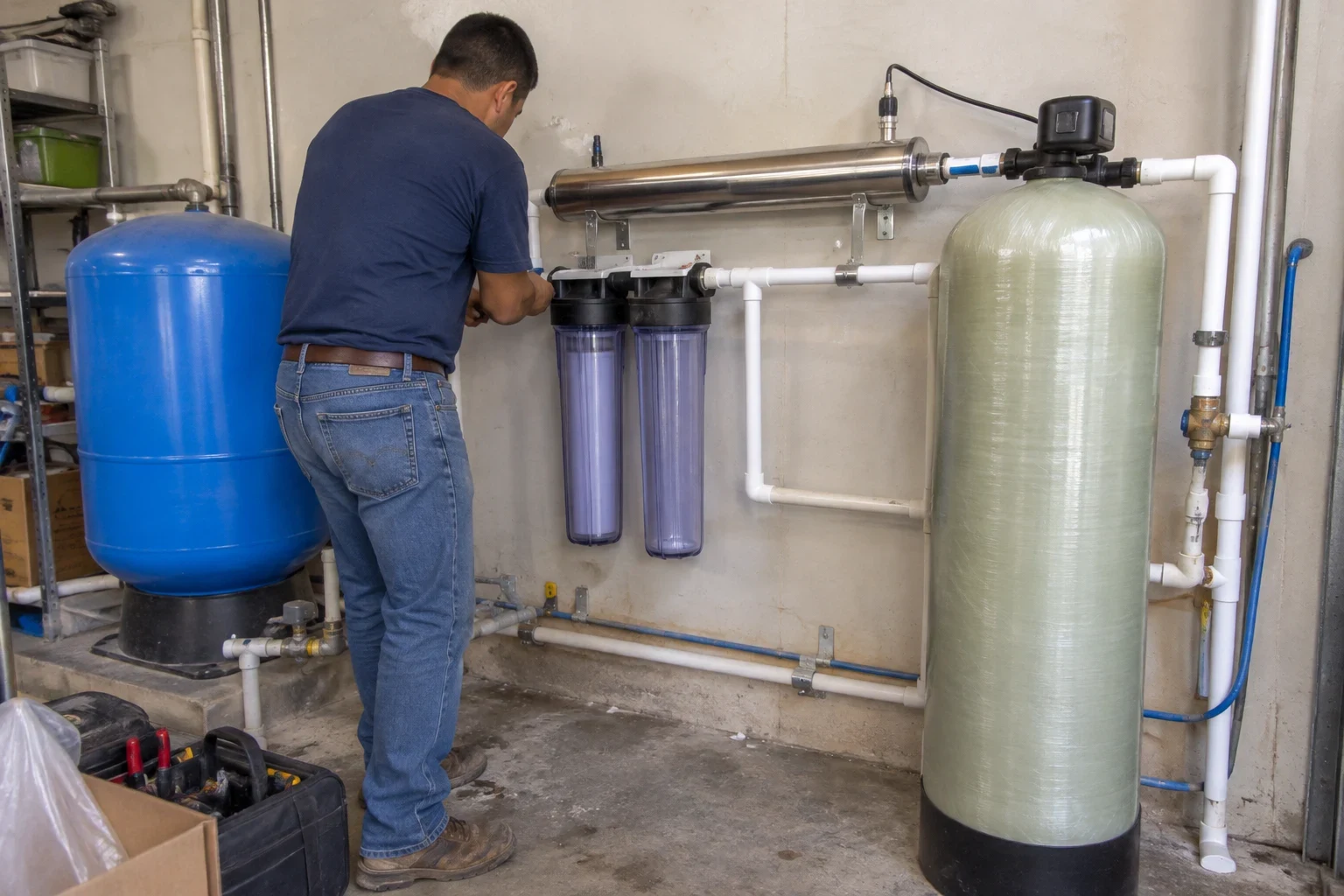
Treatment that starts with what is in your well
Most homes in Bellaire run on city water, but plenty of properties around Houston, Pearland and Sugar Land still draw from private wells, for the house or for irrigation that sometimes ends up at an outdoor tap. Well water changes with depth, season and the condition of the casing, so no single filter suits every well.
Groundwater in this part of Texas often carries dissolved iron, hydrogen sulfide that smells like rotten eggs, and enough hardness to leave scale on fixtures. Bacteria are a separate concern, especially after heavy rain or flooding pushes surface water toward a wellhead. Each problem calls for different equipment, and stacking the wrong pieces wastes money and floor space.
Our approach is simple. Test first, then recommend the shortest list of equipment that solves the problems the results show.
What a well water system can include
Sediment prefiltration
A spin-down or cartridge filter catches sand and grit before it reaches the rest of the system. It protects valves and media from wear.
Iron and sulfur removal
An air-injection or oxidizing filter turns dissolved iron and hydrogen sulfide into particles the media can trap. The tank backwashes on a schedule so the media stays clean.
Softening when the test supports it
If hardness is high enough to scale water heaters and fixtures, we add a softener downstream of the iron filter. If it is not, we leave it out. More detail is on our Water Softeners page.
UV disinfection
An ultraviolet chamber treats water for bacteria without adding chemicals. The lamp and quartz sleeve need periodic care, which we walk you through.
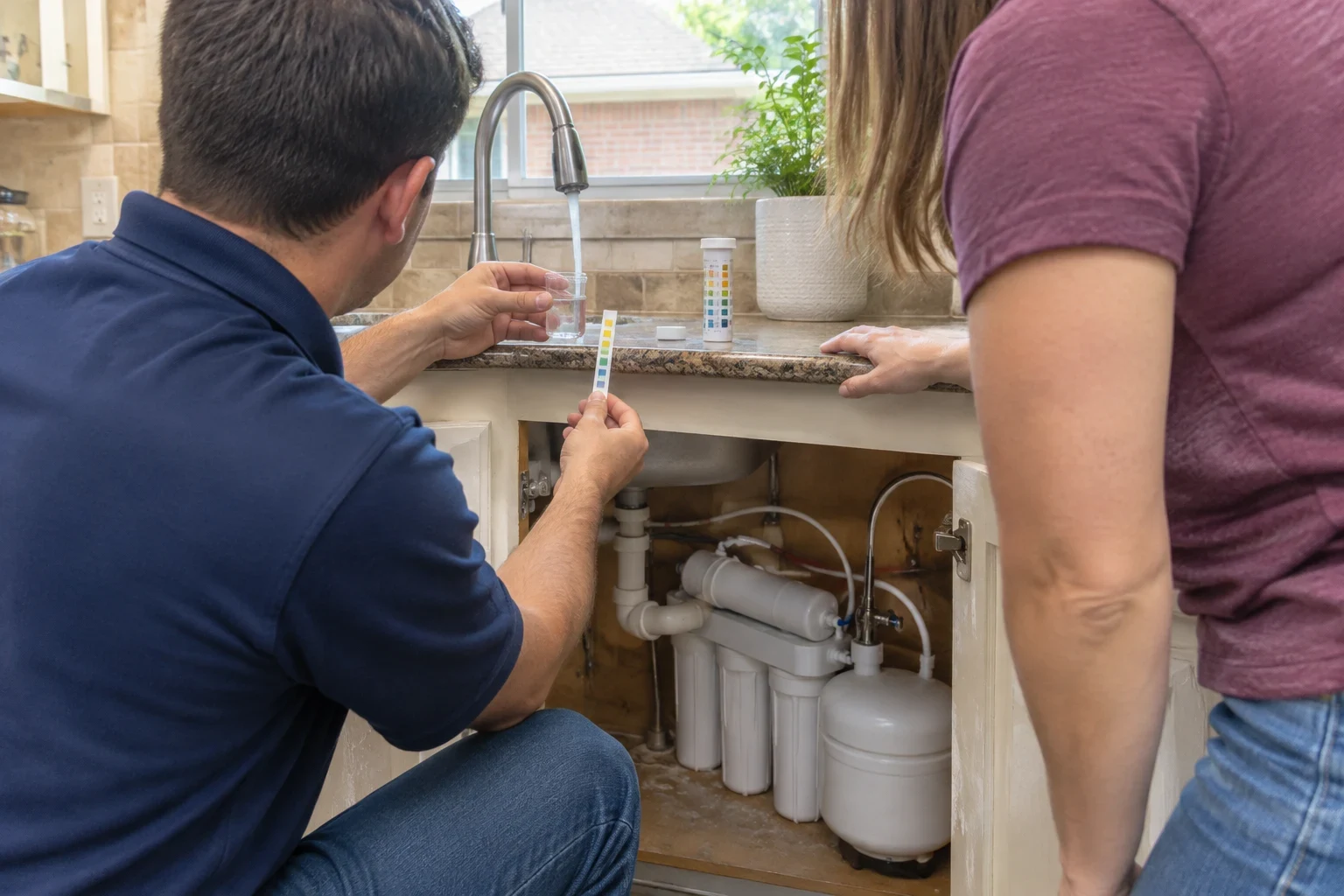
Drinking water at the sink
For an extra layer at the kitchen tap, an under-sink unit from our Reverse Osmosis line can follow the main system.
Signs your well water needs treatment
- Orange or brown stains
- Rust-colored rings in toilets, tubs and laundry usually point to iron. It tends to get worse over time, not better.
- A rotten-egg smell
- Hydrogen sulfide is common in Gulf Coast groundwater. It is often strongest in hot water and right after the water has sat overnight.
- Cloudy or gritty water
- Sediment can mean a worn well screen or a pump set too low. A filter helps, but we will tell you if the well itself needs a driller's attention.
- Scale on fixtures and heaters
- White crust on faucets and a water heater that rumbles are typical of hard water.
- After a flood or a positive bacteria test
- If floodwater reached the wellhead, or a test shows coliform, the well should be disinfected and the water treated before you drink it again.
How a well water job runs
- 1
A conversation by phone
You tell us about the well, the house and what you are noticing. We ask about well depth, pump type and any past test results.
- 2
Testing your water
We collect a sample and have it tested for iron, manganese, hardness, pH, sulfur and bacteria. You get the actual numbers, not a sales summary. Our Water Testing page explains the full panel.
- 3
A written recommendation
We lay out the equipment, where it goes and why each piece is there. If your water only needs one component, that is all we recommend.
- 4
Installation in your home
We protect the floor and walls near the pressure tank, plumb in a bypass so you can isolate the system, and set the backwash and regeneration cycles to your household's use. We clean up and show you how everything works before we leave.
- 5
Care after the sale
Full services after the sale means we stay on hand for media changes, UV lamp replacement and follow-up testing as your well changes.
What shapes the cost of well water treatment
Two wells on the same street can need very different systems, so we price from your test results and your setup. You get a written breakdown before any work begins, and installation is free.
- What the test finds
- Iron alone needs less equipment than iron, sulfur and bacteria together. Each problem adds a stage.
- Flow rate and household size
- Larger homes with more bathrooms need larger tanks and valves so pressure holds up when several taps run at once.
- Space and plumbing access
- An open garage wall is easier than a tight pump house or a crawlspace. Rerouting lines to reach the equipment adds time.
- Electrical and drain needs
- Backwashing filters and UV units need a drain and an outlet nearby. If neither is close, that work is part of the job.
Well water treatment questions
- Do I really need to test before buying equipment?
- Yes. Without numbers we would be guessing, and guessing usually means buying a softener you do not need or an iron filter too small for your water. The test also tells us whether bacteria treatment belongs in the plan.
- Will the equipment make my showers weaker?
- It should not, as long as each tank and valve matches your well. We pick equipment to suit your pump's output and how many fixtures your home runs at the same time. When people do notice a drop, the cause is almost always a system that was too small for the house.
- How often does the equipment need attention?
- Sediment cartridges are changed every few months, depending on how much grit your well produces. UV lamps are typically replaced once a year. Iron filter media lasts for years but should be checked, and we handle all of this as part of our service after the sale.
- My well water smells only from the hot taps. Is that the well?
- Often it is the water heater. Sulfur-reducing bacteria can react with the heater's anode rod and produce that smell. We check both the well water and the heater so you fix the right thing.
- Should I retest after a hurricane or flood?
- Yes, if water reached or covered the wellhead. Floodwater can carry bacteria into the well. We recommend disinfecting the well and testing again before drinking the water.
Find out what your well needs
Tell us about your well and what you are seeing at the tap. We will explain how testing works and what a system for your home would involve.