ServicesWater Testing
Water Testing in Bellaire
A filter only makes sense once you know what it needs to remove. We sample the water at your tap, go through each reading with you in plain language and tell you honestly if your home needs treatment at all, and which kind.
Why we test before we recommend anything
City water in the Houston area meets federal standards, but those standards describe water as it leaves the treatment plant. What fills your glass also depends on the pipes in your walls, the age of your water heater and any equipment already under the sink. Two houses on the same street can pour noticeably different water.
A test swaps guesswork for numbers. It shows if the taste is disinfectant, if the spots are minerals, if metals are coming from older plumbing, or if something else is going on. Sometimes the right answer is a simple carbon filter. Sometimes it is nothing at all, and we will tell you so.
For homes on a private well, testing matters even more, because no utility is checking that water for you.
What a water test covers
On-site screening at your tap
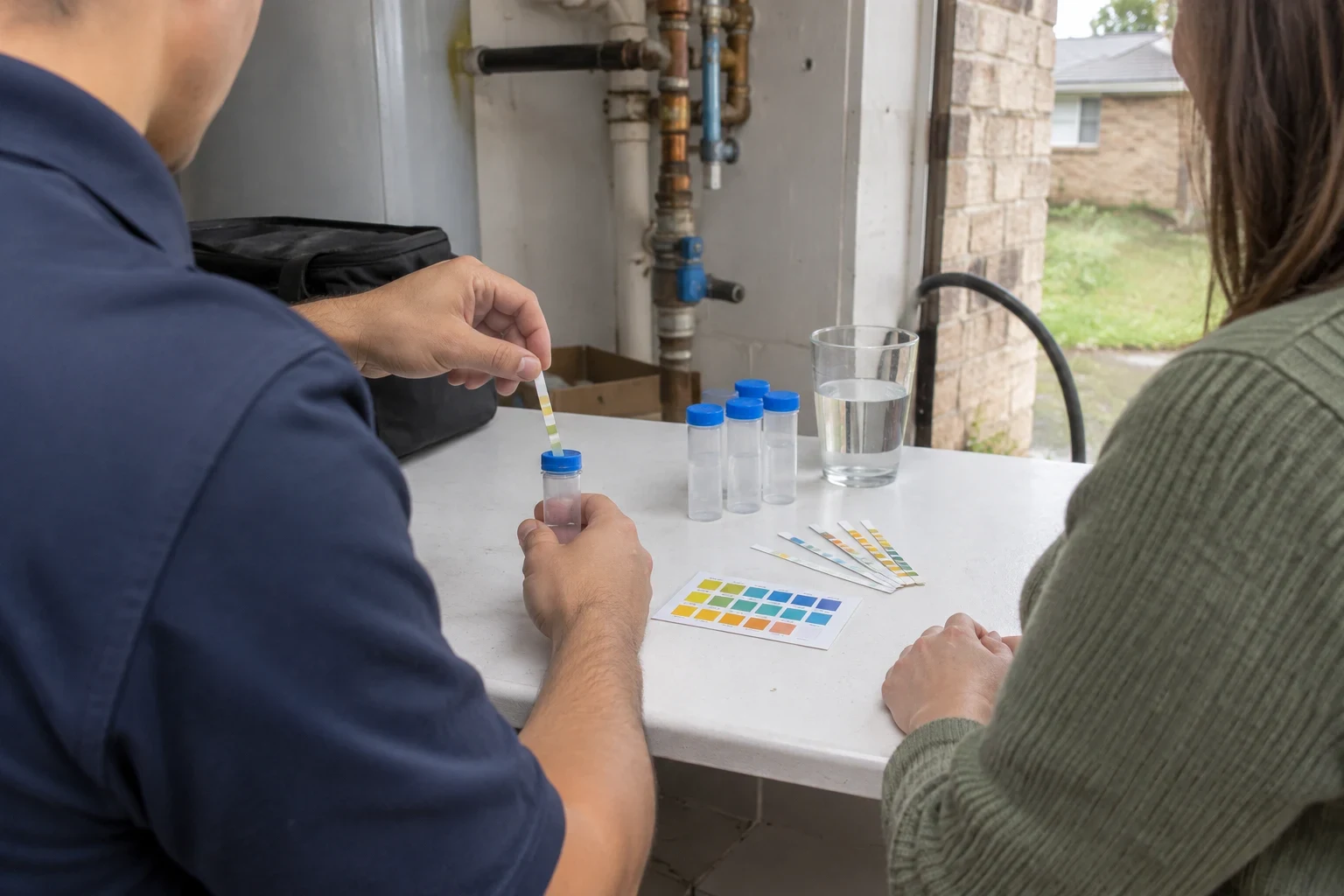
We measure hardness, chlorine, iron, pH and total dissolved solids right in your kitchen. You see the readings as we take them.
Lead and copper check for older plumbing
Homes with original galvanized or soldered copper lines can pick up metals between the main and the faucet. We take a first-draw sample, the water that sat in your pipes overnight, which is when those levels show most clearly.
Expanded panel for private wells
Well water gets checked for bacteria, nitrates, iron, manganese and sulfur. These samples go to an outside lab, and we handle collection and paperwork so the chain of custody stays clean.
Before-and-after on existing equipment
If you already own a softener or filter, we test the water going in and coming out. That shows whether it is still doing its job or simply taking up space.
A written summary you can keep
Every result goes on a written sheet with the reading, the reference limit and a short note on what it means. Nothing is buried in jargon.
Signs it is time to test your water
- A pool smell from the faucet
- A strong disinfectant taste or odor is common and usually harmless, but it tells us what kind of filtration would actually help.
- Spots, film or crust on fixtures
- White residue on shower glass or a gritty buildup in the kettle points to minerals. A hardness reading tells us whether a softener is worth it or overkill.
- Rust stains or a metallic taste
- Orange marks in sinks or a tinny flavor can come from iron in the supply or from aging pipes inside your home. Testing separates the two.
- Original pipes in an older house
- If your home predates modern plumbing codes and the lines have never been replaced, a lead and copper check is a sensible step.
- After flooding or a long outage
- Heavy Gulf Coast storms can push surface water into wells and stir up sediment in city lines. A test confirms your water is back to normal before you drink it.
- A new baby or a change in health
- Many families simply want certainty when someone in the house is more vulnerable. That is reason enough.
How a testing visit works
- 1
A short phone conversation
We ask what you are noticing, how old the house is and if your water comes from the city or a private well. Those answers tell us which tests to bring.
- 2
Sampling in your home
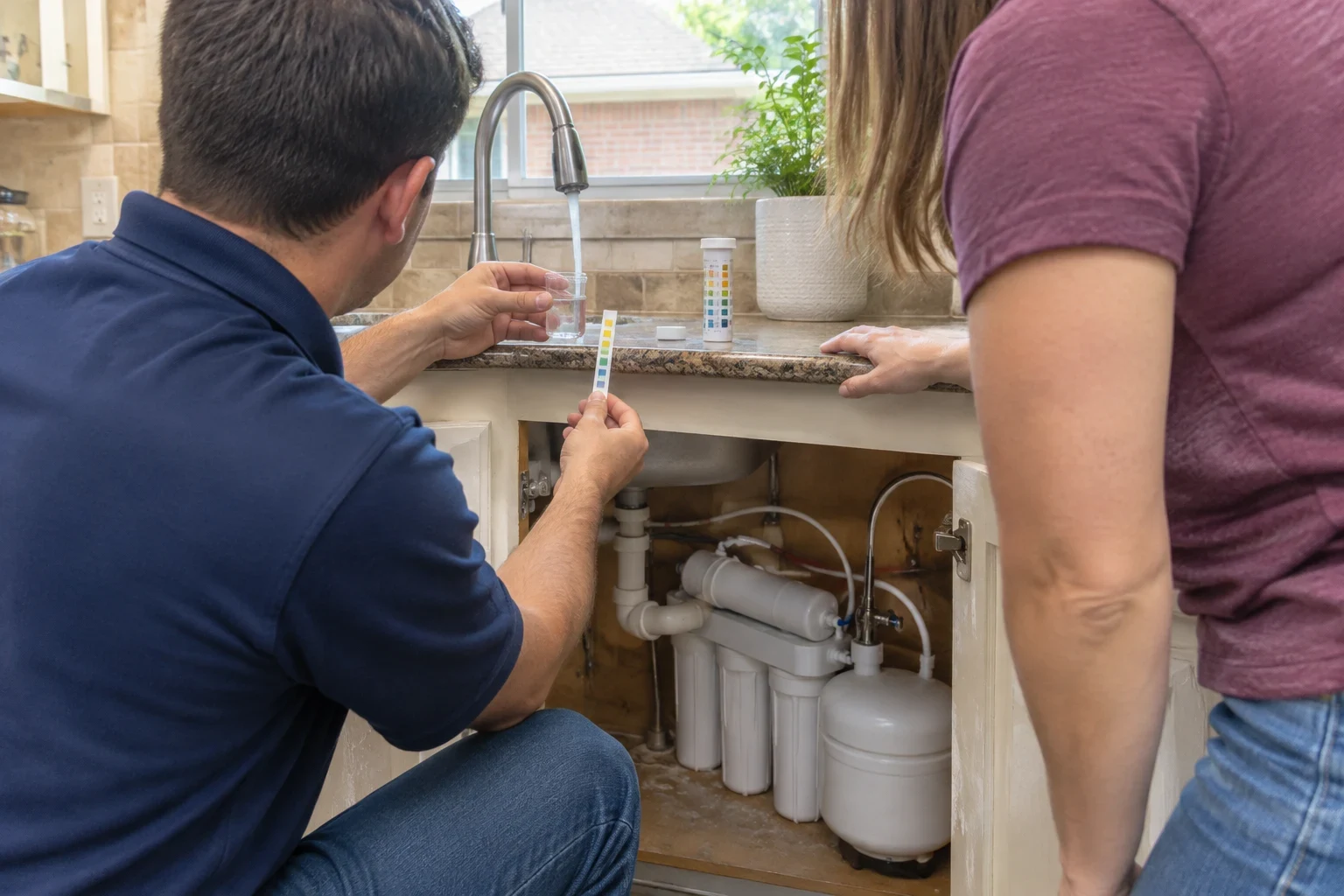
We collect from the kitchen tap and, when it helps, from a bathroom or the line ahead of existing equipment. We wear clean gloves, use sealed sample bottles and leave counters as we found them.
- 3
Readings and lab work
On-site results are ready before we leave. Lab panels for wells or lead take longer, and we call you once they are in.
- 4
An honest recommendation
We walk through each number with you. If treatment would help, we explain which system fits, such as whole-home filtration for taste or reverse osmosis for drinking water, and why. If your water is fine, that is the answer you get.
What affects the cost of water testing
Price follows two things: how much we test for and where the samples have to go. A screen we read in your kitchen costs less than a full lab panel. We give you the cost by phone before anything is scheduled, so the day holds no surprises.
- On-site screen or lab panel
- Readings taken at your tap are quicker and simpler. Bacteria, lead and nitrate testing require an outside lab, and that adds to the cost.
- City water or private well
- Well water needs a broader set of tests, since nothing upstream has treated or monitored it.
- Taps and comparison points
- Sampling a single kitchen faucet takes less time than checking several fixtures or reading the water on both sides of equipment you already own.
- Follow-up testing
- Some situations call for a second round, such as confirming a newly installed system is performing or rechecking a well after a storm.
Water testing questions
- Is city water around here unsafe to drink?
- Generally, no. Utilities in the area test on a regular schedule and meet federal limits. Most of what people notice is taste, odor or mineral spotting, and the plumbing inside a house can change what reaches the tap. A test shows which of those applies to your home.
- Will a water test tell me if I need a softener?
- Yes. Every on-site screen includes a hardness reading. When that number comes back modest, we say plainly that a softener would be money spent on a problem you do not have. When it is high enough to leave real buildup, we can look at water softeners with your actual figures on the table.
- How long do results take?
- Hardness, chlorine, iron, pH and dissolved solids are read during the visit. Lab panels for lead, bacteria or well chemistry take longer, and we call you as soon as the lab sends them back.
- How often should a private well be tested?
- Checking for bacteria and nitrates once a year is a good habit. Add a test after flooding, after any repair to the well, or when the taste, color or smell changes. Our well water treatment page explains what we do if results come back high.
- Are you going to push a system on me?
- No. Testing exists so you buy only what your water actually calls for. If you do decide on a system, installation is free, and we provide full service after the sale.
- Do I need to be home for the test?
- Ideally, yes. Someone has to let us in, and we would much rather go over the readings with you in person than leave a sheet on the counter.
Find out what is really in your water
Tell us what you are noticing and we will plan the right tests for your home. Clear numbers first, recommendations second.